
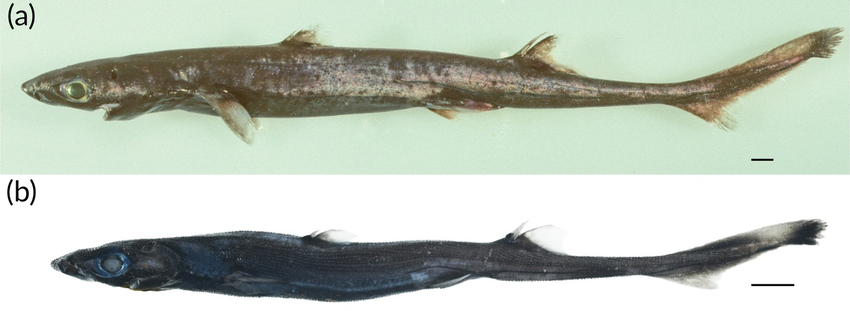
Tiny, bioluminescent predator found off Western Australia during CSIRO voyage — with hundreds more potential new species in the pipeline.
Australia has a new shark — and it glows. During a biodiversity survey in the Gascoyne Marine Park off Western Australia, scientists aboard the CSIRO research vessel Investigator identified the West Australian lantern shark, a small deep‑sea species that emits blue‑green light from organs along its body.
“Lantern sharks are an amazing group,” says Dr Will White, who helped confirm the discovery. “They’re quite small — typically 20–30 cm — and have light organs all down their bodies.”
Key Facts
- New species: Confirmed from research trawl specimens collected in the Gascoyne Marine Park, north-western Australia.
- Bioluminescent: Emits distinctive blue‑green light from organs along its body — the “lantern” effect.
- Pint‑sized: Much smaller than famous apex sharks; typically only 20–30 cm long.
- Peer reviewed process: Naming took time due to publication steps and collaboration with a lead author based in Taiwan.
- More discoveries: The 2022 voyage also uncovered a painted horn shark and a deepwater “demon” catshark, with many more candidates under review.
Why It Matters
- Deep‑sea window: The find highlights how little we know about Australia’s deep waters — and how much remains to be discovered.
- Biodiversity boom: Across groups from sharks to crabs and molluscs, scientists estimate ~600 potential new species emerged from the same survey.
- Conservation insight: Mapping who lives where helps manage vast marine parks administered by Parks Australia.
What’s Next
Researchers are preparing another expedition to the Coral Sea Marine Park off Queensland — Australia’s largest marine park — to sample down to 4,000 metres and fill major knowledge gaps in the deep.
In Their Words
“We tend to have 20 or 30 tasks going at one time … we might end up with three species described over a year or two — or 20 in a year.” — Dr Will White
Fast FAQ
Why is it called a lantern shark? The name comes from its light‑producing organs (“photophores”) arranged along the body.
Where was it found? In deep waters of the Gascoyne Marine Park, off Western Australia.
How big is it? Around 20–30 cm — much smaller than iconic large sharks.
Were other species discovered? Yes: a painted horn shark and a deep‑water “demon” catshark were also described from the voyage.